
Supply-Chain Compliance in Morocco for German Companies: LkSG Due Diligence, CSDDD and CBAM
Practice area: Contract Law & Commercial Transactions
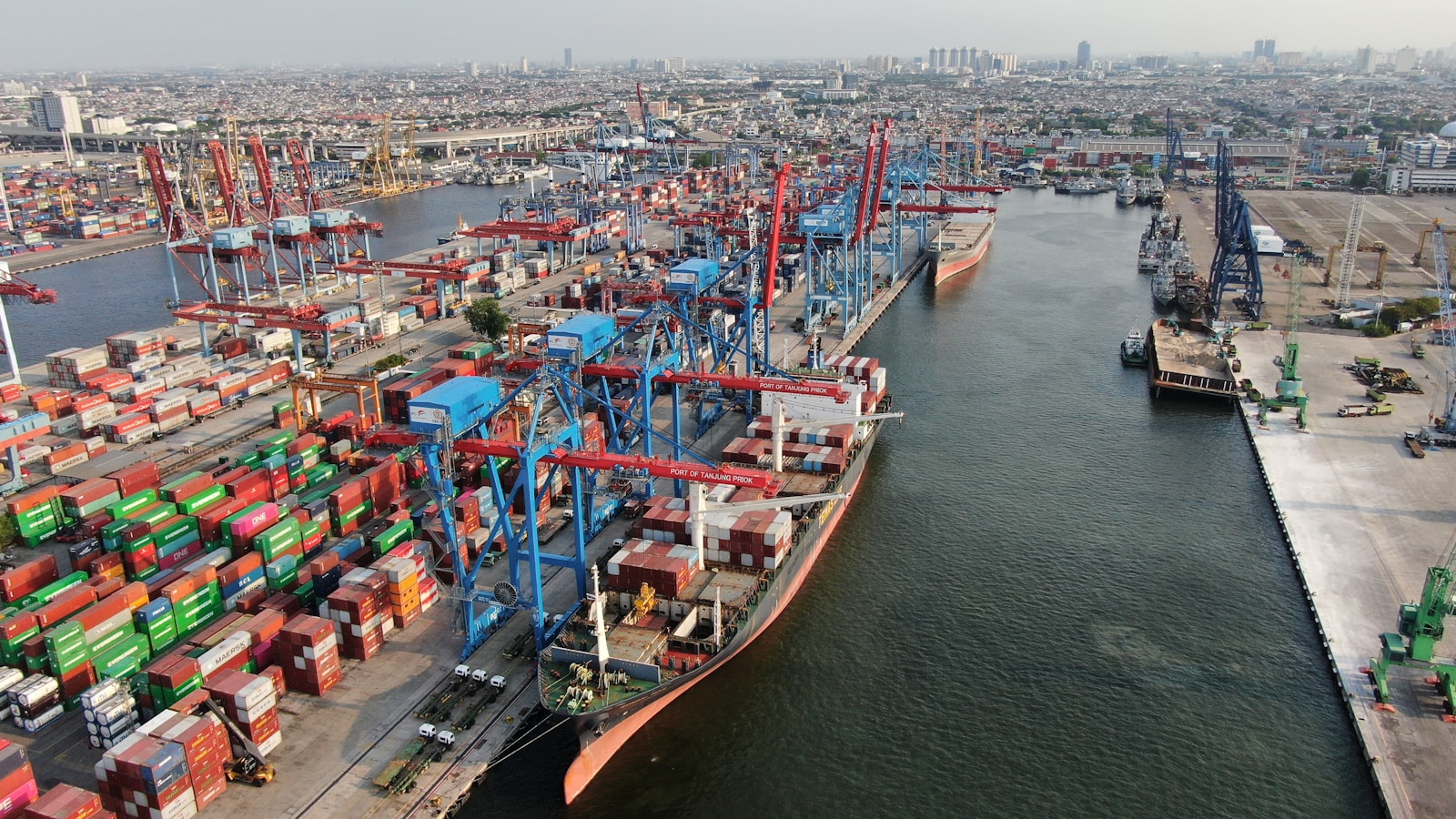
Key takeaways: A practical guide for German Mittelstand companies sourcing from or manufacturing in Morocco.
German companies with Moroccan supply chains face a convergence of regulatory requirements: the German Supply Chain Due Diligence Act (LkSG), the incoming EU Corporate Sustainability Due Diligence Directive (CSDDD), and the EU Carbon Border Adjustment Mechanism (CBAM). This guide sets out the concrete obligations under each framework, explains what a Moroccan supplier audit covers under local law, and offers practical guidance on contract drafting and on-the-ground legal support.
1. The German LkSG: What It Requires of Buyers with Moroccan Suppliers
The Lieferkettensorgfaltspflichtengesetz (LkSG), in force since 1 January 2023, applies to companies with a registered presence in Germany and at least 1,000 employees (since 1 January 2024). It imposes five core due diligence obligations on in-scope companies in relation to their own operations and their direct suppliers — including Moroccan ones:
Risk Analysis (§ 5 LkSG)
Companies must conduct an annual risk analysis to identify human rights and environmental risks across their own business area and at direct suppliers. For Moroccan suppliers, this means assessing country-specific risks such as working-hour violations, informal employment, inadequate occupational safety, and environmental compliance gaps. Where there is "substantiated knowledge" of a risk at an indirect supplier, the analysis must be extended to that tier.
Preventive Measures (§ 6 LkSG)
Where risks are identified, the company must implement appropriate preventive measures. In a Moroccan sourcing context this typically includes supplier codes of conduct, contractual compliance undertakings, training programmes, and on-site audits. BAFA (the Federal Office for Economic Affairs and Export Control), which enforces the LkSG, expects measures to be proportionate and risk-based.
Complaint Mechanism (§ 8 LkSG)
Every in-scope company must establish a complaint procedure accessible to affected persons — including workers at Moroccan supplier facilities — enabling them to report human rights or environmental violations. The mechanism must be publicly accessible, confidential, and effective.
Documentation and Reporting (§ 10 LkSG)
Companies must maintain internal documentation of all due diligence activities for at least seven years. The LkSG originally required annual reports to BAFA. That reporting obligation was suspended in autumn 2025 and the Bundestag is advancing legislation to abolish it; however, the substantive due diligence duties — risk analysis, preventive measures, complaint mechanism, and documentation — remain fully in force.
Enforcement
BAFA can impose administrative fines of up to 2% of a company's average annual worldwide turnover for non-compliance. Companies can also be excluded from public procurement for up to three years.
2. The CSDDD: How It Changes the Picture
The EU Corporate Sustainability Due Diligence Directive (CSDDD / CS3D), published in the Official Journal on 5 July 2024, takes the LkSG model to the EU level — but with significant modifications following the Omnibus I simplification package (Directive (EU) 2026/470), which took effect on 18 March 2026.
Scope and Thresholds (Post-Omnibus)
The Omnibus I package raised the CSDDD thresholds to companies with more than 5,000 employees and net turnover above EUR 1.5 billion. This means the CSDDD captures a narrower group than the LkSG (1,000 employees), but many large Mittelstand companies will remain subject to the LkSG and may fall into CSDDD scope if they are part of a larger group.
Timeline
- 26 July 2027: EU Commission publishes guidelines on due diligence processes, model contractual clauses, and risk assessment.
- 26 July 2028: Member States must transpose the amended CSDDD into national law.
- 26 July 2029: All in-scope companies must comply.
How Germany will align the existing LkSG with the CSDDD during transposition has not been formally clarified, but the LkSG is expected to continue applying to companies below the CSDDD thresholds.
Key Differences from the LkSG
The CSDDD extends due diligence obligations beyond direct suppliers to the full value chain, introduces civil liability for damages caused by a failure to comply (a mechanism absent from the LkSG), and requires companies to adopt and implement climate transition plans. The Commission will also publish model voluntary contractual clauses by July 2027.
3. Moroccan Supplier Audits: What to Check Under Local Law
A supplier legal audit in Morocco measures compliance against the Moroccan Code du Travail (Labour Code, Law No. 65-99) and related environmental legislation. The key areas are:
Labour Standards Under Law 65-99
- Working hours: The standard working week is 44 hours in non-agricultural sectors (2,288 hours/year), with a maximum of 10 hours per day. In the agricultural sector, it is 48 hours per week. Overtime must be compensated at 125% (daytime) to 200% (night, rest days) of the regular hourly rate.
- Minimum wage: Morocco operates two minimum wage systems: the SMIG (Salaire Minimum Interprofessionnel Garanti) for industry, commerce, and services — currently MAD 17.92/hour (approximately MAD 3,422.72/month), effective 1 January 2026 — and the SMAG (Salaire Minimum Agricole Garanti) for agriculture, raised to MAD 2,400/month effective April 2026.
- Child labour: Employment of children under 15 is strictly prohibited; minors under 18 may not be assigned to hazardous work.
- CNSS registration: Employers must register all employees with the Caisse Nationale de Sécurité Sociale (CNSS) and remit social security contributions. Employer contributions total approximately 21.09% of gross salary across five branches (family allowances, short-term benefits, pensions, health insurance, and vocational training). Undeclared employment is a common audit red flag and carries fines and enforcement action from labour inspectors.
Occupational Health and Safety
The Labour Code (Dahir n° 1-03-194) and Decision 93-08 of 12 May 2008 form the cornerstone of Moroccan occupational safety and health (OSH) legislation. Employers must maintain safe premises, ensure regular upkeep of machinery, buildings, and ventilation, and in certain cases provide occupational health services including medical examinations. An audit will verify the existence of safety committees, incident records, and employee training documentation.
Environmental Permits
Moroccan environmental law is primarily governed by Law 11-03 on the protection and enhancement of the environment and Law 12-03 on environmental impact assessments (études d'impact sur l'environnement). Industrial facilities must hold the required environmental permits and, for classified installations (installations classées), comply with Dahir n° 1-14-09 of 4 February 2014. Auditors verify current permits, waste management practices, air and water emission controls, and environmental impact study compliance.
Speak to a lawyer about your project
4. CBAM: Carbon Costs for Moroccan Imports into the EU
The EU Carbon Border Adjustment Mechanism (Regulation (EU) 2023/956) entered its definitive compliance phase on 1 January 2026. It applies to imports of goods in six carbon-intensive sectors: cement, iron and steel, aluminium, fertilisers, electricity, and hydrogen.
What German Importers Must Do
From 2026, EU importers must be authorised as "CBAM declarants," report the embedded emissions of their imports, and purchase and surrender CBAM certificates priced in line with the EU ETS allowance market (approximately EUR 70–100 per tonne of CO₂). The first declaration and certificate surrender deadline is 30 September 2027 for 2026 imports. A de minimis exemption applies to importers bringing in fewer than 50 tonnes of CBAM-covered goods annually.
What Moroccan Suppliers Must Provide
Importers need installation-level emissions data from their Moroccan suppliers to avoid reliance on default values, which carry a punitive top-up of 10% in 2026, 20% in 2027, and 30% from 2028 onwards. The data must cover direct embedded emissions (and indirect emissions for cement and fertilisers), verified by an accredited third-party verifier. For illustration, a 10,000-tonne shipment of grey clinker from Morocco at EUR 80/EUA could face approximately EUR 270,000 in CBAM costs in 2026.
Practical Impact for Morocco
Morocco is a significant exporter of cement, steel, and fertilisers to the EU. Moroccan suppliers that cannot provide verified actual emissions data will make their products more expensive for EU importers — creating a strong commercial incentive for Moroccan producers to invest in emissions measurement and reporting infrastructure.
5. Contract Clauses for German-Moroccan Supplier Agreements
Well-drafted supplier agreements are the backbone of LkSG and CSDDD compliance. German buyers should incorporate the following provisions:
- Compliance warranties: The supplier warrants ongoing compliance with Moroccan labour law (Law 65-99), including SMIG/SMAG payment, working-hour limits, child labour prohibitions, and CNSS registration, as well as applicable environmental permits and international standards referenced in § 2 LkSG.
- Audit rights: The buyer (or a mandated third party) has the right to conduct announced and unannounced on-site audits of the supplier's facilities, records, and sub-suppliers, with reasonable notice.
- Data provision (CBAM): For CBAM-covered goods, the supplier commits to providing verified installation-level emissions data in the format required by the EU CBAM implementing regulations (Regulation (EU) 2023/956 and associated implementing acts) within a specified timeframe before each declaration deadline.
- Remediation and corrective action: Where an audit identifies non-compliance, the supplier must implement a corrective action plan within an agreed timeframe. The buyer retains the right to suspend orders during the remediation period.
- Termination for cause: Material or repeated non-compliance with labour, environmental, or emissions-reporting obligations constitutes grounds for termination, after a notice-and-cure period proportionate to the severity of the breach.
- Cascading obligations: The supplier must impose equivalent compliance, audit, and reporting obligations on its own sub-suppliers, ensuring that due diligence extends throughout the supply chain as required by the LkSG (§ 9) and, prospectively, the CSDDD.
The EU Commission is expected to publish model voluntary contractual clauses under the CSDDD by July 2027, which can serve as a template baseline.
6. How a Local Law Firm Supports Compliance
A German-Moroccan business law firm provides critical on-the-ground capability across the compliance lifecycle:
- Supplier legal audits: Conducting systematic reviews of Moroccan suppliers against Labour Code (Law 65-99) requirements, CNSS registration records, occupational safety standards, and environmental permit compliance — producing a structured risk assessment report for LkSG documentation purposes.
- Remediation plans: Designing and overseeing corrective action plans where audits reveal gaps — such as formalising informal workers, regularising CNSS contributions, upgrading safety protocols, or obtaining missing environmental permits — with defined timelines and follow-up verification.
- Contract implementation: Drafting and negotiating bilingual (French/German) supplier agreements incorporating the compliance, audit, CBAM data-sharing, and cascading obligation clauses outlined above, tailored to the specifics of each commercial relationship.
- CBAM data coordination: Assisting Moroccan suppliers in understanding EU data requirements, liaising with accredited verifiers, and establishing emissions reporting processes that meet EU importer deadlines.
- Ongoing monitoring: Establishing periodic re-audit schedules and legal-watch services to track changes in Moroccan labour, environmental, and trade law that could affect supply-chain compliance.
- Complaint mechanism support: Helping design and implement locally accessible, confidential complaint procedures that satisfy § 8 LkSG requirements for Moroccan supplier workforces.
*This guide provides general legal information and does not constitute legal advice. Specific compliance strategies should be developed in consultation with qualified legal counsel in both Germany and Morocco.*
A practical caveat. Customs classification, standards and import formalities are administered and interpreted locally, and the written rule is only part of what governs a consignment. Counsel on the ground is what turns a compliant product into a cleared shipment.


 Changes to the commercial register
 Corporate work around the address
 Working language