
Renewable Energy and Independent Power Production in Morocco: A Legal Guide for Investors and Self-Producers
Practice area: Energy Law
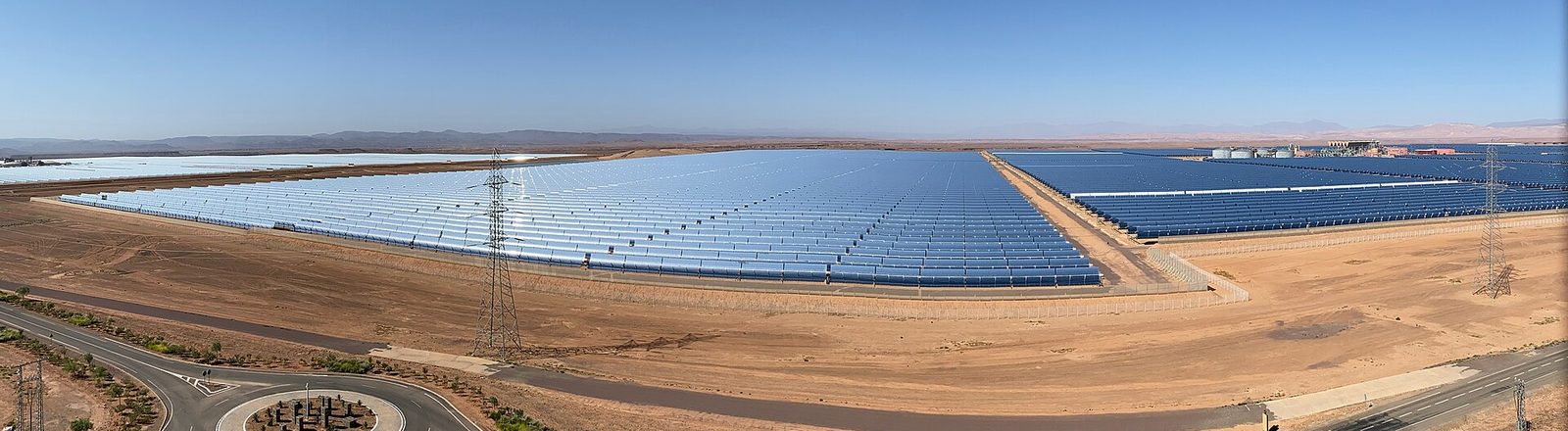
Morocco has spent the past fifteen years dismantling ONEE's historic monopoly over electricity generation, opening the sector to independent power producers ("IPPs") and, more recently, to industrial self-producers ("autoproducteurs"). For German manufacturers and other industrial offtakers considering a Moroccan project — whether to sell power to the grid, to a private counterparty, or simply to cover their own plant's consumption — the legal framework is now considerably more workable than it was even three years ago, but it remains layered, sector-specific, and subject to ongoing secondary regulation. This guide sets out the current state of that framework, distinct from Morocco's green-hydrogen regime and the firm's general energy-law overview, and focuses squarely on power generation, self-production, and grid access.
The Legal Framework Governing Renewable Power
The foundational text is Law 13-09 on renewable energy, adopted in 2010, which broke ONEE's monopoly by allowing private developers to generate, sell, and export electricity from solar, wind, and other renewable sources, subject to a carve-out excluding hydropower installations above 30 MW. [1] Law 58-15 amended this regime in 2015–2016, raising the hydropower threshold from 12 MW to 30 MW, permitting connection to low-voltage networks, and introducing a right to sell up to 20% of annual surplus production into ONEE's high- and extra-high-voltage grid. [2]
Alongside the generation framework, Law 48-15 of May 2015 created the National Electricity Regulation Authority ("ANRE"), tasked with regulating the electricity sector, overseeing network access, and setting transmission and distribution tariffs. [3] ANRE became operational only in 2018, and its practical authority has expanded materially since. [4] [5]
Self-production of electricity — installations built by an industrial or commercial user primarily to cover its own consumption — is now governed by Law 82-21, a distinct statute from the IPP-focused Law 13-09 regime. [6] ONEE, meanwhile, continues to operate as the national transmission grid operator and remains the principal offtaker for many large IPP projects, alongside its role as grid access counterparty for connection and wheeling arrangements. [7]
The 2023 Reform: Law 40-19 and the Amendments to Laws 13-09 and 48-15
On 27 February 2023, Morocco published Law No. 40-19 in the Official Bulletin, amending and supplementing both Law 13-09 on renewable energy and Law 48-15 on the regulation of the electricity sector. [8] This reform followed thirteen years of experience under the original 13-09 framework and was intended to correct persistent bottlenecks in authorization and grid access. [9]
Substantively, Law 40-19 simplified authorization and declaration procedures for renewable energy projects, clarified rules on grid access and connection by introducing the concept of network "capacité d'accueil" (hosting capacity), and strengthened ANRE's powers, including setting the commercial terms of purchase for electricity supplied to network operators on the proposal of the national transmission grid operator. [10] [11] It also permits IPPs connected to the medium-, high-, and extra-high-voltage grids to market renewable electricity to a network operator, capped at 40% of the total energy that operator supplies within its area of competence. [12] In addition, the reform introduced the possibility for plant operators to obtain certificates of origin evidencing the renewable source of their electricity. [13] Implementing decrees were anticipated in the months following publication, and ANRE has continued to issue secondary regulation since, including a February 2025 decision setting distribution network access tariffs for operators injecting or withdrawing electricity at high and medium voltage. [14] [15]
Planning something in Morocco? Tell us about your project — 30 minutes with a business lawyer, for companies and their advisers.
Talk to usSelf-Production Under Law 82-21
Law 82-21 establishes a graduated regime depending on installed capacity and voltage level. Installations connected to the network with a capacity between 11 kW and 5 MW require a formal connection request to ONEE or the relevant regional multi-service operator; above that threshold, a specific authorization is required, now issued by the Ministry of Energy Transition. [16] Notably, the grid-access threshold triggering the heavier authorization regime was lowered from 300 MW to 5 MW, substantially widening the pool of eligible self-producers, including small and medium industrial enterprises. [17] Separately, the authorization regime under Law 82-21 applies specifically to installations of 5 MW or more connected, or intended to be connected, to the medium-voltage, high-voltage, or extra-high-voltage network. [18]
A self-producer must own the self-generation installation or hold a sufficient right of enjoyment ("droit d'en disposer") over it, which has been interpreted to permit structures involving third-party developers, builders, or financiers for tertiary and industrial sites, provided the beneficiary can demonstrate that qualifying right. [19] [20] [21] The full implementing framework was completed only recently: Decree No. 2.25.100, adopted by the Government Council on 23 October 2025 and dated 5 March 2026, sets the conditions and procedures for constructing and operating self-generation installations under Articles 3 to 6 of Law 82-21. [22] [23] That decree, together with ANRE's net-metering tariff decision, confirms that self-producers may inject and sell surplus electricity into the public grid up to a strict limit of 20% of annual production, at MAD 0.21/kWh during peak hours and MAD 0.18/kWh during off-peak hours. [24] A further decree that would potentially raise the 20% surplus cap remains under government review and has not yet been finalized. [25]
IPP Structures and Power Purchase Agreements
IPPs connected to the medium-, high-, and extra-high-voltage networks may sell renewable electricity to consumers, groups of consumers, or distribution network operators, subject to conditions set by ANRE. [26] In practice, Morocco's power sector combines three models: public generation by ONEE, IPP generation under long-term PPAs (historically with ONEE as offtaker, following a competitive bidding process, often on a 25-year term and BOOT basis for MASEN-led programs), and private-to-private sales directly to eligible consumers connected at sufficient voltage. [27] [28] ONEE has entered into ten long-term PPAs with IPPs, of which six were operational and four under construction as reported. [27] The voltage tier a project connects to is central to deal structuring: IPPs may sell to consumers with access to very high, high, and — under certain conditions — medium voltage, and operators must enter into a grid access agreement with ONEE, with pricing and technical terms set jointly by ONEE and ANRE. [29] Merchant IPPs may also export power outside Morocco, subject to specific approvals and controls, with export operations controlled by ANRE and managed by the national transmission grid operator. [7] [30] Key PPA terms to negotiate accordingly include the offtake counterparty and its creditworthiness, connection voltage and wheeling charges, curtailment and grid capacity risk, and the treatment of any surplus beyond contracted volumes.
Considerations for Foreign Investors
Foreign investors structuring a Moroccan renewable or self-production project should account for several cross-cutting regimes. The Investment Charter, adopted under Framework Law 03-22 and published 12 December 2022, applies to both domestic and foreign investment (excluding agriculture) and provides tax and financial incentives, though it caps the cumulative investment premiums available for renewable energy production projects at a level fixed by regulation. [31] [32] For large state-sponsored programs, MASEN offers a "one-stop shop" bringing together permitting, land acquisition, financing, and a state guarantee for the investment. Land for solar and wind projects has typically been mobilized through negotiated transfers of state-owned ("domaine de l'État") or collective land, involving the Direction des Domaines, the cadastre, and, for collective land, consultation with the relevant collective ownership bodies. [33] On foreign exchange, repatriation of capital and profits is guaranteed under the Investment Charter for duly registered investments, but funds must generally flow through convertible Moroccan dirham accounts, and the Office des Changes has progressively liberalized — though not eliminated — its registration and reporting requirements for inbound investment and outbound transfers. [34] Permitting timelines vary significantly by project size and voltage tier, and the recent simplification under Law 40-19 and the Law 82-21 implementing decree is intended to shorten authorization periods, though the practice of individual regional and ministerial authorities still varies.
Practitioner Insights
Grid access and any associated wheeling arrangement should be locked in as early as possible in project development, since hosting capacity at a given connection point is finite and is now central to ANRE's authorization analysis. [14] [35] The choice of offtake counterparty — ONEE under a long-term PPA versus a private or eligible consumer — will drive nearly every other structuring decision, from voltage tier and connection cost allocation to financing terms and tenor. Land tenure and environmental permitting remain the most frequent critical-path items on Moroccan renewable projects, particularly where collective or state land is involved. [36] PPA payment mechanics should be aligned from the outset with Office des Changes registration and convertibility requirements to avoid repatriation friction later in the project's life. [37] Finally, because much of the detailed regime — surplus caps, net-metering tariffs, connection tariffs — is set by ANRE secondary regulation rather than by the underlying statutes, investors and self-producers should monitor ANRE's decisions closely, as recent examples show these figures changing even after the primary legislation is in force. [38] [39]
FAQ
Does Law 82-21 apply to my project, or Law 13-09?
Law 82-21 governs installations built primarily to cover the developer's own consumption ("autoproduction"), while Law 13-09, as amended by Law 40-19, governs independent power production for sale to the grid, to ONEE, or to third-party consumers. [17] [40] Many industrial projects combine elements of both and should be structured with care as to which regime, and which authorization threshold, applies.
What capacity triggers a full authorization rather than a simple declaration under Law 82-21?
Connections between 11 kW and 5 MW generally require only a formal connection request to ONEE or the regional operator; installations of 5 MW or more connected to the medium-, high-, or extra-high-voltage network require a specific authorization from the Ministry of Energy Transition. [16]
Can I sell surplus self-produced electricity back to the grid, and how much?
Yes, up to a strict cap of 20% of annual production, at tariffs currently set by ANRE at MAD 0.21/kWh (peak) and MAD 0.18/kWh (off-peak); a proposal to raise this cap is under government review but has not been adopted. [24] [25]
As a foreign investor, can I freely repatriate profits from a Moroccan renewable project?
The Investment Charter guarantees free transfer of profits and capital for properly registered investments, but transfers must be executed through convertible dirham accounts and remain subject to Office des Changes registration and reporting requirements, which have been progressively liberalized in recent years. [41]
References
• Energy Law at Morocco
• Electricity Market | Energy Partnership Morocco-Germany
• Electricity regulation in Morocco: overview
• COUNTRY PROFILE MOROCCO 2018
• COUNTRY PROFILE MOROCCO 2018
- Electricity Autoproduction: Morocco Finalizes Its Regulatory ...
- Morocco: A new legal framework for Independent Power Producers ...
- Morocco’s Energy Oasis: An Analysis of the Renewable Energy ...
- Clifford Chance | Renewable energy sector reform in Morocco - how ...
• Energy Law at Morocco
• Morocco's Energy: Legal Framework & Investment Insights
- Morocco: A new legal framework for Independent Power Producers ...
• Hydrogen Energy in Morocco: Legal Insights & Developments
• Electricity Market | Energy Partnership Morocco-Germany
- Morocco: A new legal framework for Independent Power Producers ...
- Electricity Autoproduction: Morocco Finalizes Its Regulatory ...
- Electricity Autoproduction: Morocco Finalizes Its Regulatory ...
- Legal Regime Governing the C&I in Morocco - LEXT AVOCATS (Paris, ...
- Legal Regime Governing the C&I in Morocco - LEXT AVOCATS (Paris, ...
- Legal Regime Governing the C&I in Morocco - LEXT AVOCATS (Paris, ...
- Legal Regime Governing the C&I in Morocco - LEXT AVOCATS (Paris, ...
- Morocco: Renewable energy decree on electricity for own use - Bird ...
- Self-Generation of Electricity – New Implementing Decree | Energy ...
• Morocco finally unlocks solar self‑consumption
- Self-Generation of Electricity – New Implementing Decree | Energy ...
• Electricity Market | Energy Partnership Morocco-Germany
• COUNTRY PROFILE MOROCCO 2018
• COUNTRY PROFILE MOROCCO 2018
- ONE REGION ONE VISION ONE ALN Power Guide: Projects & Infrastructure ...
- ONE REGION ONE VISION ONE ALN Power Guide: Projects & Infrastructure ...
- Morocco - Morocco Investment Charter 2022 | Investment Laws Navigator ...
• 2023 Investment Climate Statements: Morocco
• Projet de Complexe d’énergie solaire à Laâyoune - Maroc
• 2023 Investment Climate Statements: Morocco
• Electricity Market | Energy Partnership Morocco-Germany
• Projet de Complexe d’énergie solaire à Laâyoune - Maroc
• 2023 Investment Climate Statements: Morocco
• Morocco finally unlocks solar self‑consumption
- Self-Generation of Electricity – New Implementing Decree | Energy ...
- Electricity Autoproduction: Morocco Finalizes Its Regulatory ...
• 2023 Investment Climate Statements: Morocco
Related guides
One structural caveat. A project of this kind sits in front of several authorities at once, and the order in which they are approached matters as much as the quality of the file. Local counsel is usually what keeps a project moving through that sequence instead of waiting inside it.


 Changes to the commercial register
 Corporate work around the address
 Working language