
Green Hydrogen Projects in Morocco: Permitting, Land, and Offtake Contracts
Practice area: Energy Law
By Zakaria Korte, Korte Law in association with Amereller
How Are Green Hydrogen Projects Developed in Morocco?
In short: Morocco's "Offre Maroc" (March 2024) is a whole-of-value-chain framework to attract industrial-scale green hydrogen and derivatives (ammonia, methanol, e-fuels), coordinated through MASEN as the single agency. The state has earmarked around one million hectares of public land, projects are selected and allocated land by MASEN rather than bought on the open market, and investors benefit from the 2022 Investment Charter — the committed pipeline already exceeds USD 35 billion.
Planning something in Morocco? Tell us about your project — 30 minutes with a business lawyer, for companies and their advisers.
Talk to usMorocco's Green Hydrogen Strategy and Ambitions
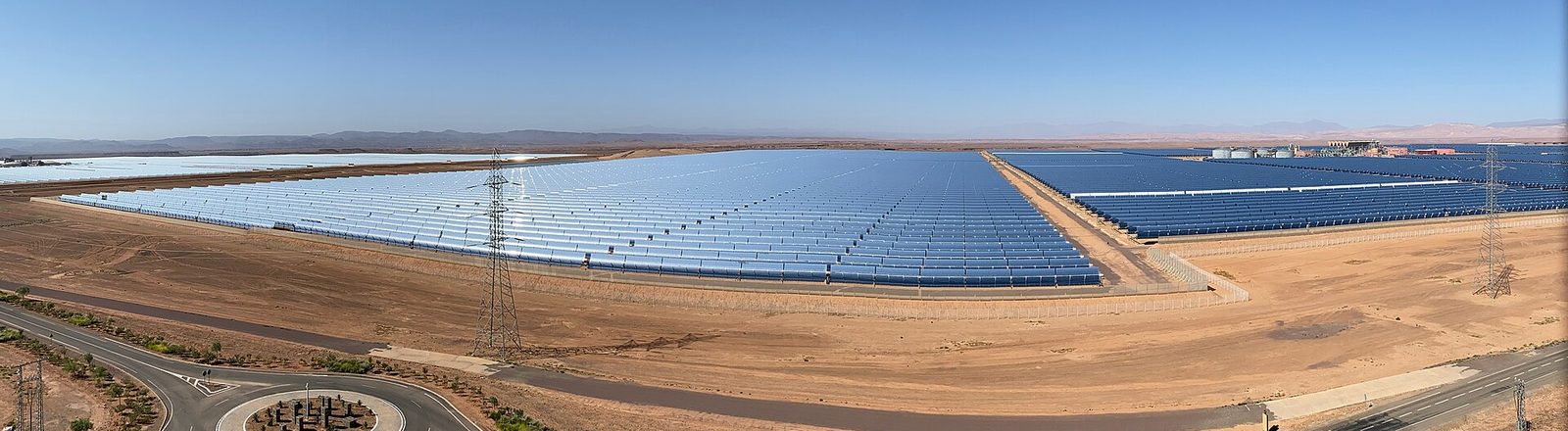
Morocco's energy transition strategy builds on more than a decade of leadership in renewable energy. With exceptional solar irradiation and strong wind regimes across Atlantic and Saharan corridors, Morocco has cultivated a deep supply chain in renewables, grid expansion, and project delivery.
Morocco's ambitions are driven by three structural advantages. First, geography and infrastructure: Atlantic ports, the Tanger Med logistics platform, and established corridors to Europe create a cost-competitive export proposition. Second, policy continuity: Morocco's long-standing renewable programs underpin investor confidence. Third, market pull: European industrials and utilities face escalating decarbonization requirements, positioning Morocco as a nearshore supplier of green molecules.
The Legal Framework for Hydrogen Projects
Green hydrogen projects sit at the intersection of Morocco's renewable energy, electricity market, industrial, environmental, and export regimes. At the core is Morocco's renewable energy legislation, enabling private generation from solar and wind, access to land, and grid connections under defined conditions.
Developers should also map cross-cutting frameworks: environmental and social laws governing impact assessments and public consultations; water and maritime frameworks for desalination and coastal facilities; investment and foreign exchange rules enabling capital inflows and repatriation; and industrial and safety regulations for hydrogen and ammonia production.
Land Acquisition and Rights for Project Development
Utility-scale hydrogen platforms require large, contiguous land parcels. Morocco offers several pathways:
- State or communal land concessions for strategic sites in coastal and high-resource corridors. Long-term concessions or emphyteutic leases grant surface and usage rights.
- Private land acquisition or long-term lease with thorough title reviews, cadastral checks, and zoning analyses.
- Servitudes and rights of way for power evacuation, water intake, and transport corridors.
- Coastal and port zones for export-oriented ammonia or e-fuels, negotiated with port authorities.
The Permitting Pathway
Bankable hydrogen projects follow a staged permitting roadmap:
- Environmental and Social Impact Assessment (ESIA) with public consultation and authority approval
- Grid connection and private line approvals
- Water abstraction and desalination permits for electrolysis water supply
- Industrial licensing and safety for hydrogen and ammonia production, storage, and handling
- Export, customs, and port permits for ammonia or e-fuels terminal operations
- Foreign investment, FX, and incentives registration
Offtake Contract Structures and Bankability
Sponsors most frequently contemplate merchant export with long-term ammonia offtake (take-or-pay structures, price floors/collars), integrated e-fuels with diversified buyers across shipping, aviation, and chemicals, hybrid models with domestic anchor demand, and corporate PPAs for upstream renewables.
Lenders prioritize: tenor aligned to debt maturity, transparent pricing mechanics, certification and guarantees of origin, delivery and logistics provisions, and credit and security packages.
Key Risks and How to Mitigate Them
- Resource and intermittency risk — mitigate via hybrid solar-wind portfolios and limited storage
- Permitting and land certainty — front-load site screening and baseline studies
- Water availability — use best-available desalination technology
- Certification and market access — draft offtake with adaptive certification clauses
- FX and repatriation — record foreign investment properly and structure accounts to protect convertibility
Why Korte Law Is Positioned to Help
Green hydrogen in Morocco sits at the frontier of energy, industrial, and trade law. Korte Law is an international law firm based in Rabat and Berlin, advising sponsors, lenders, and offtakers across the project lifecycle. In association with Amereller, our network spans more than eighty lawyers in Europe and MENA.
Frequently Asked Questions
What is Morocco's "Offre Maroc" green hydrogen framework?
Announced in March 2024 (Head of Government Circular No. 03/2024), the "Offre Maroc" is a national framework covering the entire green hydrogen value chain — renewable generation, electrolysis, and the transformation of hydrogen into ammonia, methanol and synthetic fuels — open to export, domestic use or both. MASEN acts as the single entry point for project evaluation and implementation, and the pipeline under the offer already exceeds MAD 319 billion (about USD 35 billion).
How does a green hydrogen or ammonia project get permitted?
The renewable installations underpinning a project must sit within government-designated wind and solar zones. The pathway involves submitting a proposal to MASEN, assessment by MASEN and a steering committee (financial capacity, value-chain experience), then land-allocation negotiations involving the investment committee, the regional Wali/Governor and MASEN. Environmental impact assessment and standard building/operational permits (architectural plans, land documents) are required; Law 40-19 (2023) has simplified certain renewable-energy authorisations.
How does a foreign investor secure land for a hydrogen project?
The state has identified roughly one million hectares of public land in designated energy zones (an initial 300,000-hectare tranche released gradually), with each selected Phase I project eligible for up to 30,000 hectares via preliminary land-reservation agreements at subsidised rates. Land follows MASEN's selection process — investors do not buy plots on the open market — and reservation agreements enable feasibility studies and engineering before final commitments.
Who are the key authorities and offtakers?
MASEN is the focal point — evaluating proposals, coordinating land, and acting as a one-stop shop for permitting and project support. ONEE manages the grid and grid connection. Domestic offtake centres on OCP Group (green ammonia for fertilisers) and ONEE, while export-oriented projects target European buyers through long-term offtake and mechanisms such as H2Global.
How are offtake arrangements typically structured?
Projects are generally underpinned by long-term offtake agreements — with domestic industrial buyers such as OCP, or with European offtakers for export volumes — alongside power arrangements for the renewable electricity feeding electrolysis. Bankable, long-dated offtake is usually the precondition for financing.
What incentives are available for hydrogen investors?
There is no hydrogen-specific incentive regime yet, but projects benefit from the 2022 Investment Charter (Law 03-22): direct investment grants, VAT and customs-duty exemptions, and professional-tax holidays, together with subsidised access to public land in the designated zones.
Related Articles- Real Estate Acquisition by Foreigners in Morocco
- Tax Incentives and Free Zones in Morocco
- Foreign Exchange Rules in Morocco: Payments and Repatriation
If you are evaluating or advancing a green hydrogen project in Morocco, contact Korte Law in Rabat or Berlin to discuss a tailored roadmap.
One structural caveat. A project of this kind sits in front of several authorities at once, and the order in which they are approached matters as much as the quality of the file. Local counsel is usually what keeps a project moving through that sequence instead of waiting inside it.


 Changes to the commercial register
 Corporate work around the address
 Working language